
Success story

The first part of the name, Carretus, comes from the Occitan Mont, and from the Roman Mons which relates to an elevated place; the second part of the word would perhaps come from the pre-indo-European root Car– meaning “ stone ”; the whole word meaning a stony elevation. The place refers to the “ mount of Carretus ”, after the name of a Gallo-Roman character.
Born of ancestral magnificence remains, Carretus finds its origins in the Gallo-Roman villa of Montcaret where Saint-Pierre church stands today.
Stemmed from this prosperous old villa ruins with a unique history, Carretus belongs to a strong historical heritage.
50 years before our era, Roman peace rules over our territories. Montcaret and its Gallo-Roman villa are located at the junction of Roman roads of DIVONA CADURCORUM (Cahors), DIOLINDUM (Lalinde), BURDIGALA (Bordeaux) and LUGDUNUM (Lyon).
Montcaret Gallo-Roman villa overlooked the right bank of Dordogne and reached its pinnacle in the 4th century. The villa was set up as a rural aristocratic house including a residential area (pars urbana) and a farming center (pars rustica). It was part of these social perception places that became the rural palaces emblematic of the monumentalisation trend. The Montcaret pars
rustica was a winery located at Le Nodin, producing local wine. Thus, the villa provided its own wine, by and for the lords. Carretus has been following this tradition since then and raises it today as know-how with its sparkling elixir.
After Frank and German tribe invasions, Montcaret village was destroyed.
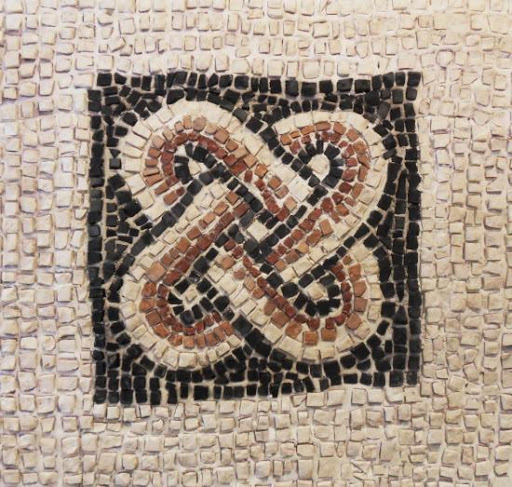
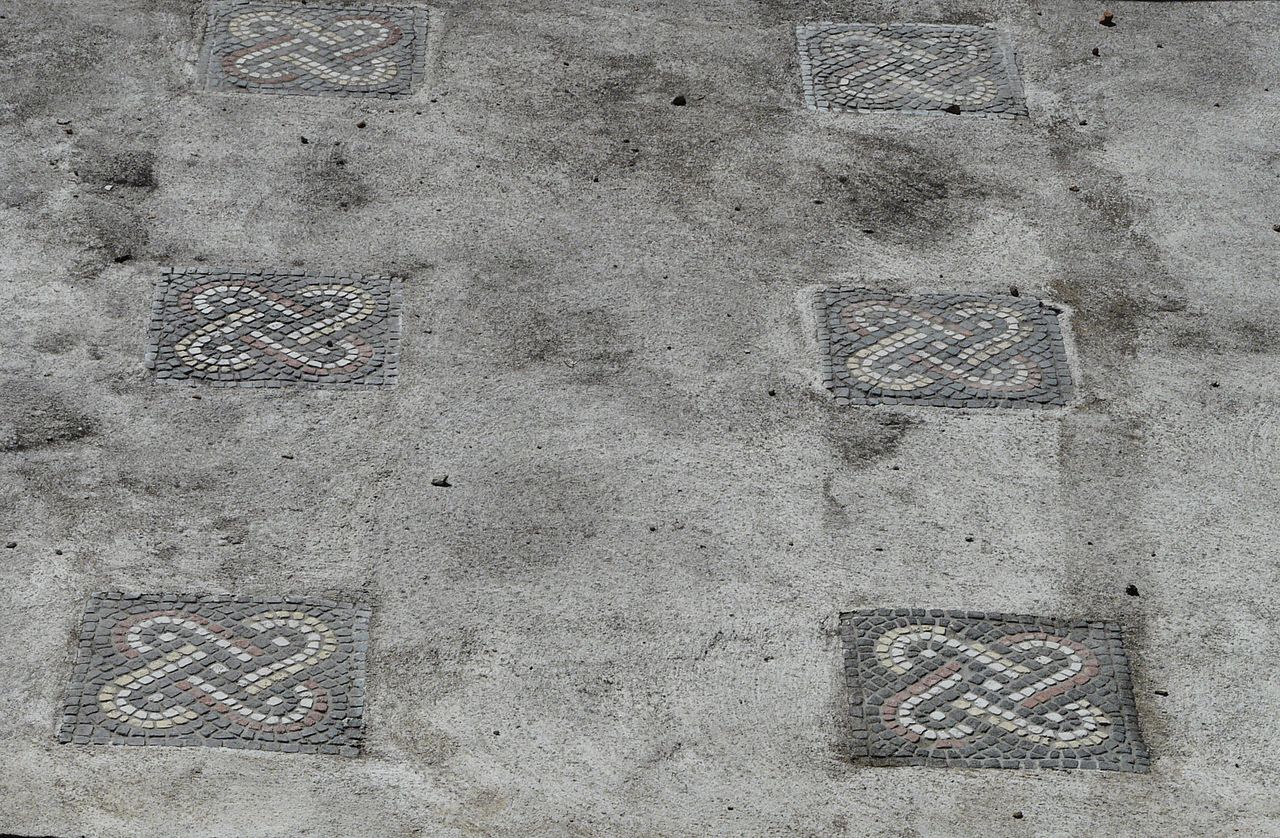
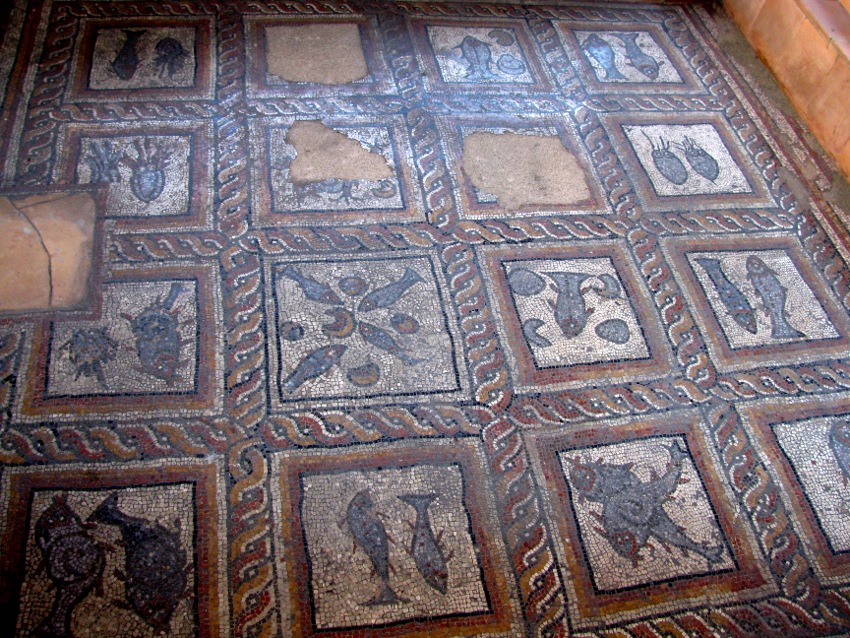
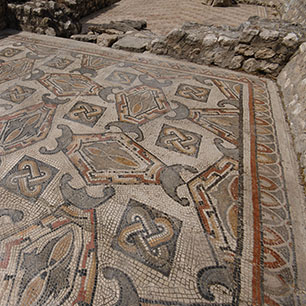
As a result, the Gallo-Roman villa was rebuilt, magnified in a sumptuous way. Life was peaceful combining the bath freshness and the wine pleasures. Mosaics ornamented large reception rooms and private baths arranged around a large courtyard. The gallery led to private baths. The entrance baths floor is decorated with a white background mosaic of ancient shields (scuta) alternating with knots of Solomon. These are the shapes that enhance the Carretus bottle. The most remarkable part of the spa complex is the swimming pool, whose bottom is covered with a square mosaic divided into sixteen small panels, of which thirteen in good condition symbolize marine animals: fish, cuttlefish, shellfish, etc. The walls of the pool are lined with terracotta tiles and a step allows guests to sit against the east wall.
Next to the pool is an individual bathtub with a white marble-plated bottom. The pool and bathtub emptied into a gutter along the pool. Thus, Montcaret Gallo-Roman villa with its 2200 m2 offered to its guests a disproportionate sized space with, in particular, a huge ceremonial room of a 330 m2, the largest known in this part of Gaul. It was among the most prestigious dining room (triclinium) in the Roman world, around a 54 m2. It was a peristyle surrounding a large indoor garden and a thermal section representative of the luxury of the time. The bathing tradition played an important part in the seigneurial life. In the vain and obstinate search for a form of harmony, it contributed in balancing the body. Place of great conviviality between well-born and of debates between people of the same world, baths provided a sense of well-being, comfort and belonging to a group of privileged groups.
As for the festivities, they took place in the dining room or in the ceremonial room. Lust is the perfect definition for it, its inhabitants took advantage of their wealth for all the more pleasure and excess.
Regarded as a second Venice for its festivities, Montcaret villa invites you to join its moments of well-being, luxuriance, enthusiasm and pleasure.
The villa was the place of a wise staging of the imperial image, magnified by the monumental adornment offered by elites. Mosaics materializing the antique luxury embellish this place full of exuberance and praising the appearance and image. Such places made it possible to show one’s greatness and richness.
Carretus follows his medieval destiny through time and invites you to be part of the privileged ones who stayed in these aristocratic places. Heir to Gallo-Roman villæ nobility of southwestern Gaul, Carretus uses its singular character to offer you the most prestigious elixirs.
Tasting Carretus and closing your eyes, you will find in its fine bubbles sensations of well-being and sweetness in this mosaic luxury. 24 CARAT GOLD brings its modernity by making it even more exceptional and exclusive.